

| Nuns' Beer A study in which teetotaling Spanish nuns drank a regular half-litre of beer showed that beer may help reduce cholesterol levels. The "magic" ingredient is hops. "Hops, one of the basic components of beer, may provide benefits that aid in reducing levels of total cholesterol and triglycerides," the Centre for Information on Beer and Health said in a statement. The experiment selected the teetotaler Cistercian nuns because of their steady lifestyle and balanced diet. Fifty nuns drank half a litre of beer a day for 45 days, then stopped for six months. Then they took 400 milligrams of hops daily for 40 days. The result was a six per cent reduction in total cholesterol. ----------------------- Belgium Exports Exceed Home Consumption Belgian brewers sold more beer overseas than what was consumed in the country last year, according to the Belgian Brewers' Federation It was the first time Belgian beer exports surpassed home consumption. In the last 12 months Belgian beer production rose by six percent while domestic consumption fell to an all time low -- under 90 liters per person. As a result, Belgian beer exports rose by 15 percent, and accounted for 55 percent of the country's production. Falling beer consumption at home was attributed to stricter drinking laws and the rising popularity of other beverages. A downside of this according to the Belgian Brewers' Federation is that exporting beer would require new investments -- beers have to be packaged to travel by sea, and the taste must remain unchanged whatever climate in those destination countries. |
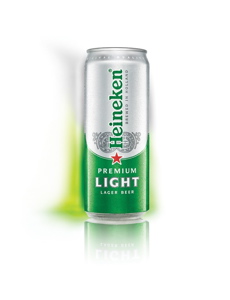
| Slim Can - Same Beer Heineken Premium Light is now available in a slim can designed to, according to Heineken, convey elegance, differentiate it from other beers. Previously Premium Light was available only in a bottle. A company spokesman said that "beer makers have had incentive to find more innovative packaging to regain some of the edge they've lost to spirits. This kind of makes sense, you have a slimmer can for a lighter beer." Premium Light was introduced in March 2006. Its success has generated interest in the niche of imported light beers, which historically have occupied a much smaller portion of the market than domestic lights, which have half the market. Heineken itself had a very good year, as Premium Light jumped into the top 10 of import brands. |

Feature News from beernexus.com
Six Packs in PA - Shocking!
As much as the casual BeerNexus reader might be to
learn that you cannot buy a six pack of beer at a local
retailer in Pennsylvanian residents of that state might
be even more shocked to learn that proposed
legislation might make it possible.
A key state Senate committee signed off on a bill that
would allow beer distributors to sell six- and 12-packs
rather than just 24-container cases. A full Senate vote
could come this fall. But between now and then, liquor
regulators in the Senate and state House must deal
with two industry groups whose concerns could
potentially skunk the legislation.
The Pennsylvania Tavern Association, which
represents about 1,000 bar and tavern owners, fears
the bill could cut into beer sales at member restaurants
and taverns. The industry says it took a financial hit
when the state allowed beer distributors to open on
Sundays, and believes the proposed six-pack rules
would compound the damage.
The Malt Beverage Distributors' Association of
Pennsylvania, which represents beer distributors,
dislikes aspects of the bill that would allow certain
delis, restaurants and supermarkets to sell consumers
up to three six-packs.
Caught in the middle is the beer consumer, who's long
clamored for changes to a system that allows
consumers to buy beer only by the case from
distributors, or by the six-pack at a premium from bars
and taverns.
''I don't think we're going to reach a compromise,'' said
Syd Logan, the ranking Democrat on the Senate Law
& Justice Committee, which has oversight of
alcohol-related issues. ''So we're going to move
forward whether they like it or not.''
If the bill becomes law, consumers would have more
choices. At distributors, citizens would be allowed to
buy as little as a six-pack. (Now it's only by case or
more.) At bars and taverns, they'd be allowed to buy
up to three six-packs. (Now, they can only buy two at a
time.) For the first 10 months of the new law,
consumers would be unable to buy prepackaged
18-packs of beer. But they would be able to buy 18
cans or bottles that they could mix-and-match as they
choose.
As much as the casual BeerNexus reader might be to
learn that you cannot buy a six pack of beer at a local
retailer in Pennsylvanian residents of that state might
be even more shocked to learn that proposed
legislation might make it possible.
A key state Senate committee signed off on a bill that
would allow beer distributors to sell six- and 12-packs
rather than just 24-container cases. A full Senate vote
could come this fall. But between now and then, liquor
regulators in the Senate and state House must deal
with two industry groups whose concerns could
potentially skunk the legislation.
The Pennsylvania Tavern Association, which
represents about 1,000 bar and tavern owners, fears
the bill could cut into beer sales at member restaurants
and taverns. The industry says it took a financial hit
when the state allowed beer distributors to open on
Sundays, and believes the proposed six-pack rules
would compound the damage.
The Malt Beverage Distributors' Association of
Pennsylvania, which represents beer distributors,
dislikes aspects of the bill that would allow certain
delis, restaurants and supermarkets to sell consumers
up to three six-packs.
Caught in the middle is the beer consumer, who's long
clamored for changes to a system that allows
consumers to buy beer only by the case from
distributors, or by the six-pack at a premium from bars
and taverns.
''I don't think we're going to reach a compromise,'' said
Syd Logan, the ranking Democrat on the Senate Law
& Justice Committee, which has oversight of
alcohol-related issues. ''So we're going to move
forward whether they like it or not.''
If the bill becomes law, consumers would have more
choices. At distributors, citizens would be allowed to
buy as little as a six-pack. (Now it's only by case or
more.) At bars and taverns, they'd be allowed to buy
up to three six-packs. (Now, they can only buy two at a
time.) For the first 10 months of the new law,
consumers would be unable to buy prepackaged
18-packs of beer. But they would be able to buy 18
cans or bottles that they could mix-and-match as they
choose.
 |
| |
 |